


18th November 2024
Written by: Thomas McCarthy, Teagasc
Introduction
The circular bioeconomy in primary production aims to maximise biomass utilisation in agricultural, forestry and food production to increase sustainability. European (EU) member states increasingly consider resource-efficient biomass use in achieving climate targets. Upcycling, valorisation and processing of biomass streams require a detailed synopsis of the resources available, along with the processing needs of industry stakeholders to effectively transition towards more circular processes.
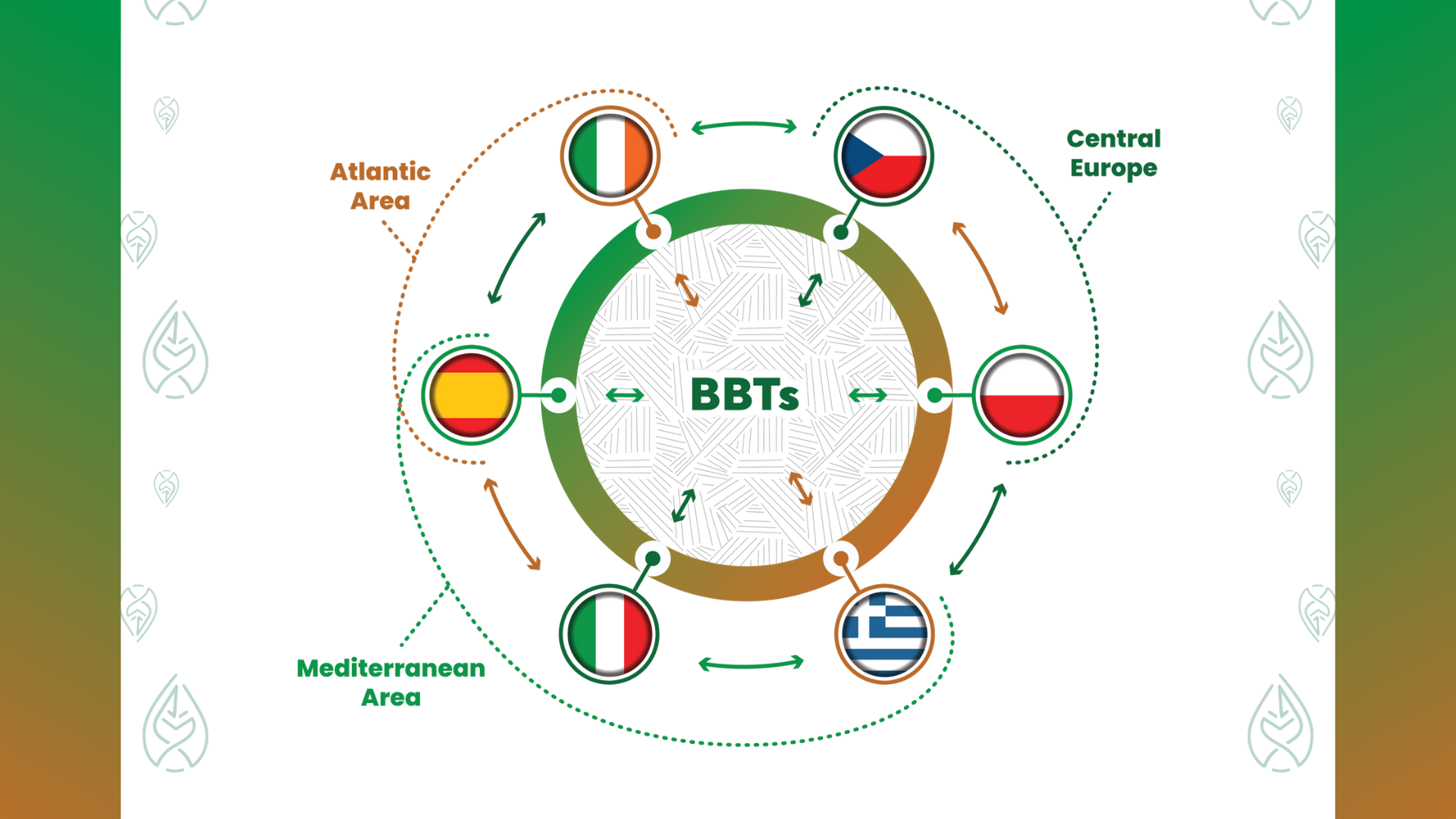
BBioNets is an EU project with six established regional Forest and Agriculture Networks (FANs) in Ireland, Spain, Greece, Italy, Poland, and Czech Republic. The project promotes and advances management and processing of agricultural and forest biomass with Bio-Based Technologies (BBTs). Earlier this year, workshops were held in each FAN to identify the key biomass resources available in the six EU regions and their current uses, and to identify and prioritise the key processing needs required for a socio-ecological transition to the circular economy (Figure 1).
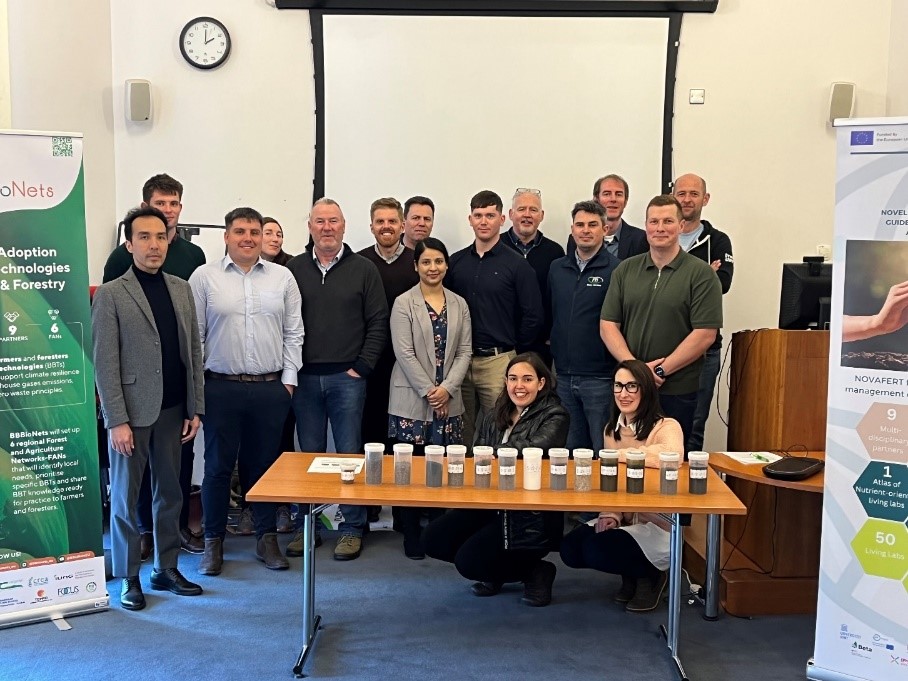
Figure 1: Irish FAN workshop to identify resources and needs in the Irish bioeconomy
Key resources and needs in the six BBioNets countries
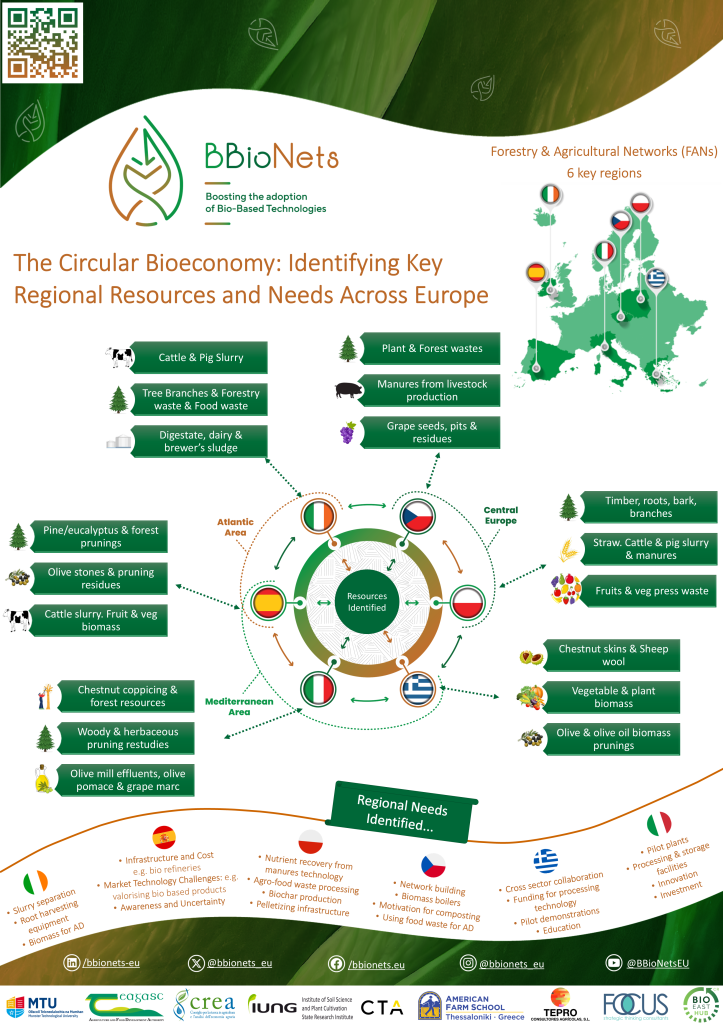
In the Czech Republic, organic waste and biomass resources, such as plant and forest wastes, sewage sludge, and fast-growing woody plants, are available as raw material. However, challenges include a need for improved communication between composting, biogas, and wastewater treatment plants, as well as the availability of biomass combustion boilers. There is demand for stronger buyer networks for compost products, and greater motivation for industries like breweries and distilleries to adopt more circular processes.
Ireland‘s bioeconomy is rich in resources such as cattle slurry, timber waste, and digestate from anaerobic digestion (AD) plants. Yet, the country faces infrastructure limitations, including the need for more AD plants and incinerators to process wood by-products. Slurry separation technology and harvesting equipment are also needed. Regional funding for shared technologies could help overcome these challenges and make processes more circular.
In Greece, biomass from chestnut skins, olive production, and prunings are key resources. However, challenges in ensuring the quality of biomass streams, such as contamination with foreign matter is a concern. There is also a need for increased access to processing technologies and educational initiatives to teach farmers about specific treatment protocols. Wool processing technology for agriculture is another area that needs development.
Italy‘s bioeconomy draws from a diverse range of resources, including wastewater, olive mill effluents, and chestnut coppicing. The country’s needs revolve around transforming plant residues into secondary materials, improving innovation and visibility for bio-based products, and enhancing storage and processing infrastructure. Mobile equipment for forestry and drying technologies are also in demand, alongside innovations like the production of thermoplastic starch for biodegradable materials.
Poland has a strong base of agricultural residues such as straw, manure, and fruits and vegetables waste. However, the country needs root harvesting equipment and farm-scale biogas production systems. Green biorefineries could play a key role in processing grasses into animal feed, while biochar and RENURE fertiliser production could enhance nutrient recovery from manure.
Spain‘s bioeconomy benefits from forest residues, olive by-products, and fruit and vegetable biomass. However, seasonality and moisture content pose challenges for efficient transport and valorisation of these materials. Awareness of circular economy practices is also limited, suggesting a need for greater education and support for sustainable practices in the bioeconomy.
Conclusion
In conclusion, the bioeconomy across these European countries demonstrates significant potential due to the availability of diverse organic and agricultural resources. A visual representation of the information outlined is available in a poster on the BBioNets website. Each region is equipped with materials that could support sustainable practices and circular economies. However, several common challenges must be addressed, including the need for enhanced processing technologies, infrastructure development, and stronger networks for resource valorisation. Countries like the Czech Republic, Ireland, and Poland require better equipment and systems to optimize the use of their biomass, while Greece and Italy must focus on improving the quality and circular use of their bio-materials. A cross-cutting theme in all countries is the need for education, innovation, and collaboration, ensuring that these bioeconomy efforts can mature into efficient, sustainable systems. With the right investments and infrastructure, these nations could significantly enhance their contributions to a greener, more sustainable Europe.
Click here to download the article.
Click here to view the poster in high definition.