



12th-13th November 2025
Written by: Dafni Delioglani, FOCUS STC
BBioNets Joins FOREST4EU and ResAlliance at Their Joint Final Event
On 12-13 November 2025, BBioNets was represented by project partner CREA at the FOREST4EU and ResAlliance Joint Final Event in Vinkovci, Croatia. The event explored the future of Europe’s forests and landscapes, with a focus on resilience, sustainability, and the bioeconomy.
BBioNets’ Involvement
During the Panel Discussion, BBioNets engaged in an interactive exchange on cross-project collaboration. The debate stressed the central role of Operational Groups in bridging research with practical forestry and agriculture. Key outcomes included challenges in aligning methodologies across EU projects, highlighting co-creation, multi-actor approaches, and knowledge sharing. The need for shared data platforms and joint policy recommendations was reinforced, with ResAlliance presenting its White Paper. Speakers underlined the value of joint events in fostering networks across forestry, agriculture, and agroforestry. They also emphasised the importance of donor support through flexible funding and coordination mechanisms. Future synergies were identified in climate resilience, bioeconomy, digital tools, and cross-border restoration, with EU funding offering fertile ground for collaboration.
BBioNets was also engaged in a thematic discussion focused on innovations contributing to farm resilience, sustainability, and the provision of ecosystem services. The debate focused particularly on carbon farming certification and its potential implications for agroforestry systems. The discussion drew on insights from the ResAlliance practical abstract, stressing the importance of integrating agroforestry into broader climate strategies. Overall, the session underlined carbon farming as both a market opportunity and a policy tool to strengthen resilience and sustainability in rural landscapes. This session, with the other two on innovative practices in the areas of sustainable forest management, wood mobilisation and non-wood forest products and on innovative practices that contribute to the adaptation of forests to climate change, and to make them more resilient to drought, wildfires and pests & diseases, provided an informal networking opportunity, enabling participants from different sectors and countries to establish new connections and explore future collaboration.
During the Joint Collaborative Session, BBioNets presented the BBioNets Knowledge Platform, a single access point to all project outcomes designed to accelerate the uptake of BioBased Technologies (BBTs) in agriculture and forestry. The Platform was showcased in its four components: BioBased Technology Inventory: easy access to information on BBTs collected from Operational Groups and EU-funded projects; BBTs Assessment Tool: a cost-effectiveness analysis instrument to evaluate bio-based technologies; Regional Dynamics: high-level studies of economic, environmental, and technical parameters in represented regions and Knowledge Transfer: educational and training materials to promote faster and wider co-creation and adoption of innovative solutions. The session produced concrete proposals for co-creation workshops among EU-funded initiatives, aimed at accelerating the adoption of innovative practices. Another result was the agreement to develop pilot actions that integrate forestry and bioeconomy solutions, ensuring that sustainability measures are tested and scaled across different European landscapes.
Conclusion
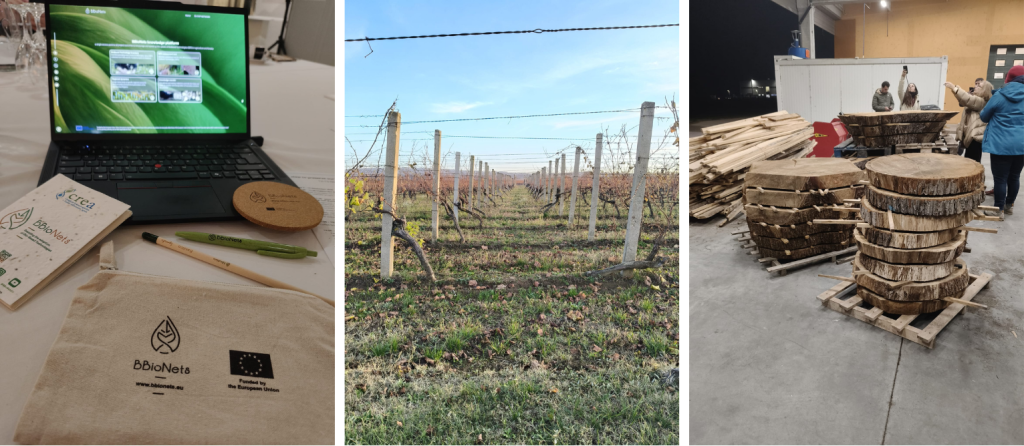
The event included two field study visits showcasing practical applications of sustainable land management. At the Spacva Oak Forest, participants observed innovative forestry practices and discussed local challenges in adapting to climate change. The Agroforestry/Vineyard site demonstrated sustainable vineyard practices integrating crops and trees to support biodiversity. Discussions emphasized how agroforestry can enhance ecosystem resilience and economic sustainability in Mediterranean and temperate zones.
BBioNets’ participation underscores the critical role of EU collaboration in driving impactful bioeconomy innovations and demonstrating how knowledge exchange can transform Europe’s landscapes and advance sustainability goals.
For more information, visit the event page on ResAlliance’s website.