


31st October 2025
Two years into its mission, the BBioNets project is charting a powerful course towards a more resilient and circular European bioeconomy. With a core focus on translating innovative Bio-Based Technologies (BBTs) from regional pilot projects into widely shared knowledge, the project has successfully built a robust European network, effectively bridging the gap between local innovation and EU-wide policy action.
The period spanning late 2024 and throughout 2025 has been marked by a flurry of high-impact activities. From showcasing regional successes at major European summits to hosting a wave of local Info-Days, BBioNets has effectively brought the bio-circular economy discussion to the forefront—connecting farmers, foresters, researchers, and policymakers across its operational Forest and Agriculture Networks (FANs).
Key Achievements of Year Two
Regional FANs Become Catalysts for Action
Following up on the achievements of the first year, the true success of the second year lies in the evolution of BBioNets’ Regional FANs, which have moved from communication hubs to direct catalysts for action and policy influence. The project partners ensured that local grassroot innovations resonated at the highest levels, such as when CREA presented the Italian FAN’s BBTs at the National Meeting of the Italian Local Food Policies Network in Turin, or when TEPRO and CTA showcased Andalusia’s leading role in biomass valorisation at the Biocircular Summit 2025 in Madrid. These activities underscore the project’s ability to inject on-the-ground knowledge into critical European policy and industry debates, strengthening collaboration and ensuring local needs inform the wider bio-circular agenda.
This knowledge is being amplified through widespread and ongoing Info-Days, engaging stakeholders across Europe. Specific examples of localised impact include the presentation of the Italian SCARABEO Operational Group (OG) as a successful model for local farmers in Ireland, discussions around industrial hemp, and the showcasing of practical economic opportunities created by OGs at major agricultural fairs in Poland and Italy. In Spain and Greece, the Info-Days have concentrated on regional priorities, from olive by-product valorisation in Andalusia to guiding stakeholders on how to apply for new OGs in Greece. This concerted effort, which included a joint conference during Bioeconomy Ireland Week 2025 addressing barriers in EIP-AGRI funding, demonstrates the project’s method of using localised events to fuel the next wave of bio-based innovation. More information about BBioNets’ Info-Days can be found here.
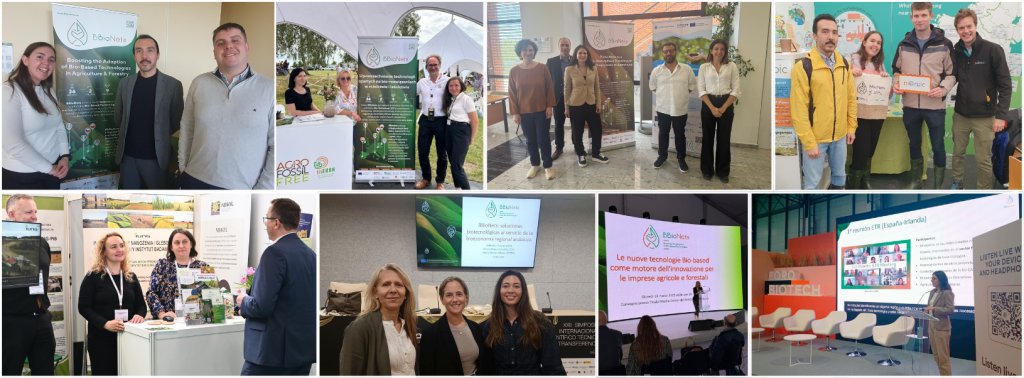
Figure 1: Photos from the BBioNets Info-Days.
Scaling Innovation: The BBioNets Digital Ecosystem
Beyond the ground-level work of the FANs, the second year saw the successful launch and population of the project’s digital ecosystem, designed to ensure that local success stories can be easily accessed, adopted, and scaled across Europe. This is centred on the BBioNets Knowledge Platform, a single access point to all project outcomes that aims to encourage and speed up the uptake of BBTs in agriculture and forestry.
The platform provides a continuous knowledge flow, starting with the comprehensive Bio-Based Technology Inventory. This powerful database provides easy access to detailed information on BBTs collected from over 80 sources, including various EIP-AGRI OGs and EU-funded projects. The Inventory transforms fragmented knowledge into an organised, easily browsable resource for practitioners.
This data is then strategically analysed using the innovative BBTs Assessment Tool. This unique, interactive tool allows users to perform a cost-effectiveness analysis of different BBTs by inputting their specific regional economic, environmental, and technical parameters. This ensures that the resulting recommendations are highly tailored, realistic, and practical—effectively de-risking the adoption of new solutions.
The results generated by this analysis provided the foundation for creating six dedicated regional BBT roadmaps in April 2025. These roadmaps represent the definitive path for implementing the most suitable BBTs in each region (Italy, Ireland, Spain, Poland, Greece, and the Czech Republic). In a nutshell, they define an “identity card” for an ideal regional BBT and use the assessment data to identify and prioritise the five most viable BBTs for local implementation, supporting long-term sustainability and cost efficiency.
Complementing the platform’s analytical tools, the consortium has carried out a high-level study of specific regional economic, environmental and technical parameters of the BBioNets regions, and is currently developing extensive educational and training material. This includes a number of Practice Abstracts, infographics, factsheets, and videos specifically designed to promote the faster and wider co-creation and transposition of innovative solutions into practice. By pairing robust data with sophisticated analysis and clear guides, BBioNets has established a comprehensive framework for driving sustainable, competitive change throughout the European agriculture and forestry sectors.
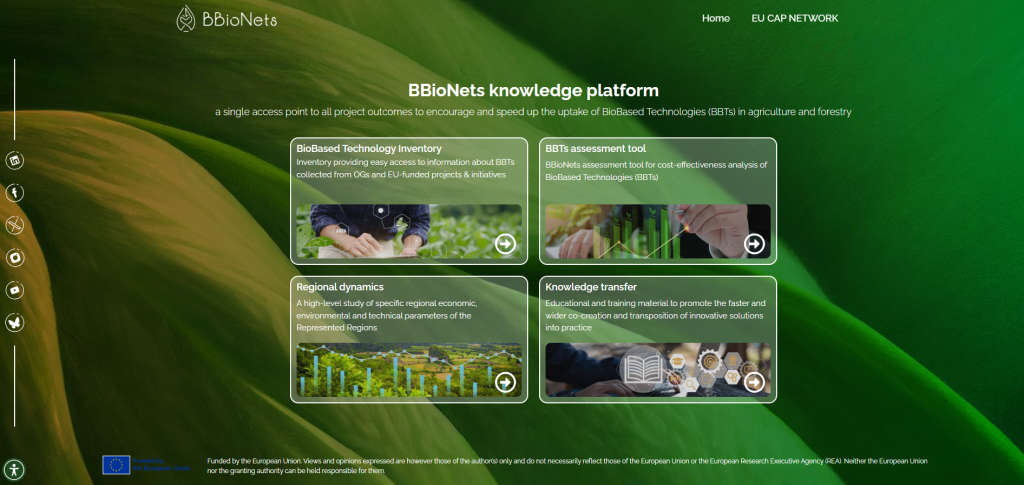
Figure 2: Screenshot from the BBioNets Knowledge Platform.
Cross-Border Collaboration: Amplifying European Impact
BBioNets has consistently leveraged its internal network and sought crucial external synergies, firmly establishing itself within Europe’s agricultural and forest innovation landscape. The project operates on two integrated levels: delivering on its commitment to internal cross-fertilisation among its regional networks while reaching outwards to cultivate broader European collaboration through its key mechanism, the Standing Liaison Round Table (SLRT).
1. Internal Synergy: Enhancing Regional Cross-Fertilisation
The project successfully executed its first European Transnational Region (ETR) Meetings in December 2024, delivering on its commitment to enable essential cross-fertilisation between its regional Forest and Agriculture Networks (FANs). These sessions saw the Atlantic regions (Ireland & Spain) discuss forest sector circularity, Central Europe (Czech Republic & Poland) focus on livestock and agricultural waste management, and the Mediterranean partners (Italy & Greece) exchange knowledge on common biomass processing technologies and social impacts.
Crucially, BBioNets went a step further than originally planned by opening these ETR meetings to contributions from external partner projects, enriching the knowledge exchange beyond the BBioNets consortium itself. This integration maximised the impact of the meetings by bringing external expertise directly into the regional dialogue.
2. External Reach: The SLRT and Amplifying Outreach
The success of BBioNets’ external collaborations is underpinned by its Standing Liaison Round Table (SLRT). This core collaboration concept aims to expand outreach by fostering knowledge exchange among several EU-funded projects at the intersection of the bioeconomy and agriculture/forestry.
This external networking was strategically extended through two key actions: the BioPills campaign and the Cross-Fertilisation Workshop.
First, under the auspices of the SLRT, the collaborative social media campaign ‘BioPills’ was launched. The first round of this campaign was successfully completed, serving as a series of Bioeconomy Spotlights where external partner projects shared concise insights, data, and case studies. This ongoing digital initiative, now in its second round, is crucial for increasing coherence and improving the dissemination of bioeconomy knowledge across platforms.
Building on the SLRT’s momentum, BBioNets co-organised a major online workshop in May 2025 with four other EU-funded Thematic Networks (FOREST4EU, NUTRI-KNOW, Soil-X-Change, and AQUAGRI-KNOW). This pivotal EU Cross-Fertilisation Workshop – titled “The Future of EIP-AGRI Operational Groups” – brought together a multi-level array of stakeholders, including OG representatives and EU CAP Network officers. The results of this significant collaboration were encapsulated in a Joint Publication summarising findings and recommendations for strengthening OG visibility and impact.
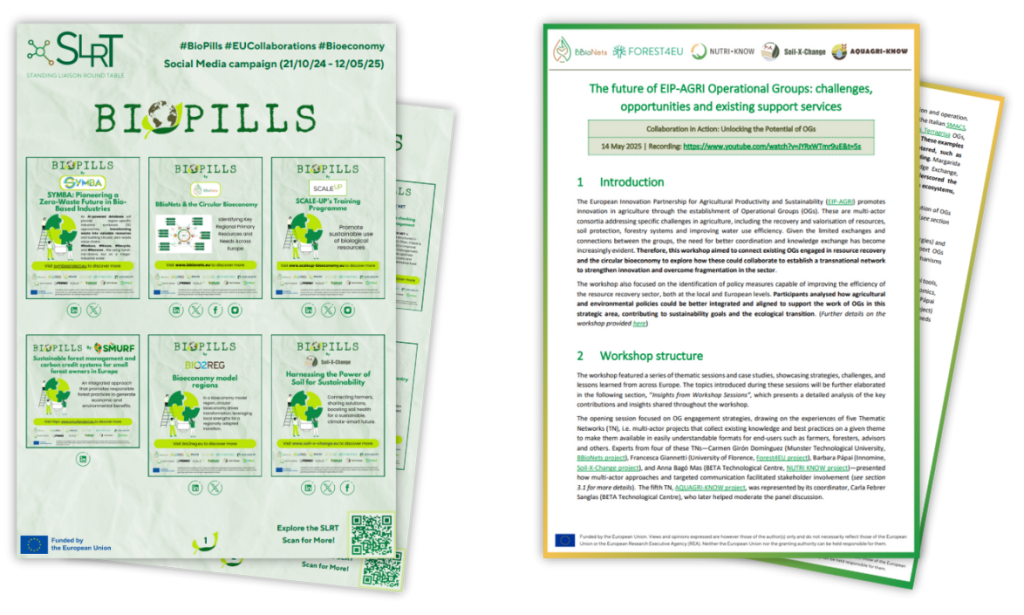
Figure 3: BioPills campaign and Joint Publication from the EU Cross-Fertilisation Workshop.
Further strengthening its position, BBioNets actively participated in the SWG SCAR AKIS Meeting and the European Forest Innovation Workshops, where it championed its dissemination strategy of “knowing what to disseminate and disseminating wisely,” ensuring project outputs reach the right practitioners across diverse platforms like the EU-FarmBook and the EU CAP Network.
For a quick overview of the key project achievements from this initial period, be sure to watch our new promotional video (also available with subtitles on our YouTube channel):
Looking Forward
As we enter the final phase of BBioNets, our focus shifts from developing tools to maximising their impact and securing a lasting legacy. Building on the strong foundation laid in the first two years, we are now concentrating on direct knowledge transfer and policy integration.
A key priority is the roll-out of Train-the-Trainer activities in each FAN region. These targeted sessions are designed to empower local advisors and experts, ensuring the project’s wealth of BBT knowledge is effectively disseminated to farmers and foresters long after the project concludes. Concurrently, we are launching a series of national policy events across all six FAN countries. These events will use the BBT Roadmaps and regional assessment data to influence national and regional policy frameworks, translating on-the-ground knowledge into actionable governmental support for the bio-circular economy. These national efforts will then culminate in a final major European policy event late spring/early June, where the combined regional recommendations will be presented to policymakers and stakeholders to drive EU-wide change.
To further refine our successful cross-border approach, the next rounds of European Transnational Region (ETR) Meetings are scheduled between late 2025 and 2026. These six upcoming meetings will adopt a new thematic focus, pairing countries based on BBTs of common interest. This shift will facilitate highly targeted knowledge transfer, allowing participants from one country to learn about specific, validated solutions and practices applied in another.
BBioNets is committed to seeing its BBT solutions fully integrated into Europe’s agricultural and forestry practices, ensuring sustainable, competitive change continues into the next decade.